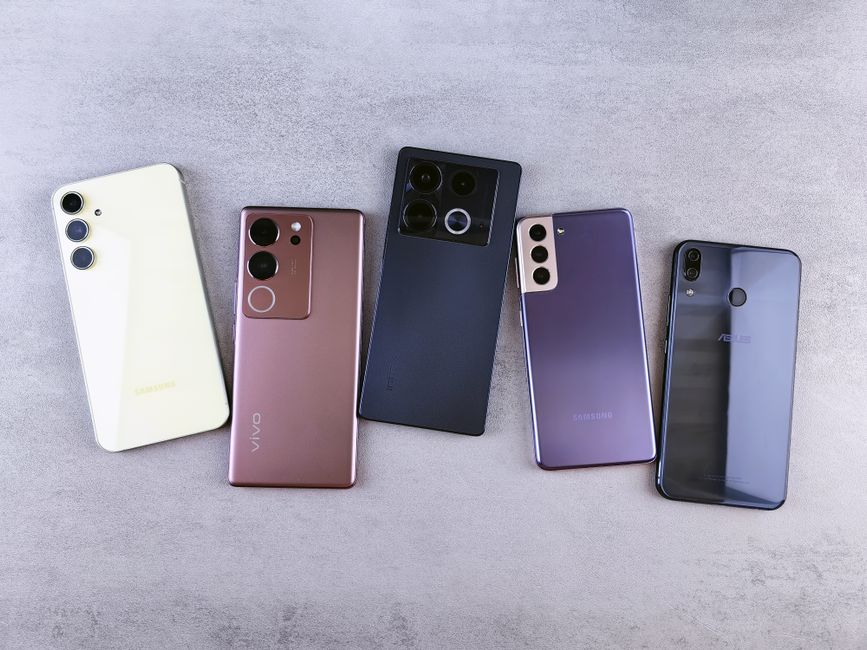

1. The Undisputed Flagship: Samsung Galaxy S24 Ultra
Price Point: Premium ($1,300+) – Best for Power Users & Creators
The Galaxy S24 Ultra remains the benchmark for Android excellence in 2024. Powered by the Qualcomm Snapdragon 8 Gen 3 for Galaxy (or Exynos 2400 depending on region), it delivers blistering performance for gaming, multitasking, and AI processing. The defining feature is the titanium frame, making it lighter and more durable than its predecessors. The 6.8-inch Dynamic AMOLED 2X display with a 120Hz refresh rate and 2,600 nits peak brightness is the brightest in the lineup. The camera system is a beast: a 200MP main sensor joined by a new 50MP 5x telephoto lens that uses AI-driven digital zoom to achieve “optical quality” at 10x. The S Pen is now fully integrated for note-taking and precision editing. Samsung’s Galaxy AI suite—including Live Translate, Note Assist, and Generative Edit—adds practical, on-device intelligence. Battery life is robust at 5,000mAh, with 45W wired charging (slightly slower than competitors). For users who demand zero compromises on display, camera versatility, and software longevity (seven years of OS updates), this is the king.
2. The AI Camera Champion: Google Pixel 9 Pro XL
Price Point: Upper Mid-Range / Premium ($900 – $1,100) – Best for Photography Lovers
Google continues to redefine computational photography with the Pixel 9 Pro XL. The Tensor G4 chip focuses heavily on AI and machine learning, enabling features like “Magic Editor” for object removal, “Best Take” (combining faces from multiple shots), and “Audio Magic Eraser” for video. The camera hardware sees an upgrade: a 50MP main sensor, a 48MP ultrawide, and a 48MP 5x telephoto lens. The real magic is in the processing—Pixel images look natural, with perfect HDR and true-to-life colors. The 6.7-inch LTPO OLED display (120Hz, 3,000 nits) is stunning. The “Video Boost” feature uploads footage to Google servers for HDR+ processing, yielding DSLR-like video quality. Battery life hits all-day usage with a 5,050mAh cell, though charging speeds (30W wired) lag behind rivals. The Pixel 9 Pro XL offers a clean, bloat-free Android 14 experience with seven years of OS updates. It’s the best choice for anyone who values camera intelligence over raw specs.
3. The Performance Beast: ASUS ROG Phone 8 Pro
Price Point: Premium ($1,100 – $1,200) – Best for Mobile Gamers
ASUS has refined its gaming pedigree into a sleeker, more mainstream design for the ROG Phone 8 Pro. Under the hood sits the Snapdragon 8 Gen 3 with up to 24GB of LPDDR5X RAM. The 6.78-inch AMOLED display has a 165Hz refresh rate, a 720Hz touch-sampling rate, and a peak brightness of 2,500 nits, making it the smoothest and most responsive screen for competitive gaming. The “AeroActive Cooler X” accessory keeps temperatures down during extended sessions. Unique features include “Air Triggers” (ultrasonic shoulder buttons) for console-like controls and a customizable “AniMe Vision” mini-LED display on the back for notifications. The 5,500mAh battery supports 65W wired charging and 15W wireless charging. The camera has improved—a 50MP main lens with gimbal-like stabilization—but it’s not a flagship camera phone. For hardcore gamers who want a phone that also functions as a daily driver without the gamer aesthetic, the ROG Phone 8 Pro is unmatched.
4. The Compact Powerhouse: Asus Zenfone 11 Ultra
Price Point: Upper Mid-Range ($700 – $800) – Best for One-Handed Users
In a market obsessed with large screens, Asus continues its commitment to compact flagship performance. The Zenfone 11 Ultra features a 6.7-inch display (slightly larger than previous Zenfones but still narrower than competitors), making it extremely manageable. It packs the Snapdragon 8 Gen 3 processor, 16GB of RAM, and a 5,000mAh battery—impressive for its size. The 50MP main camera (with gimbal OIS) and 32MP telephoto lens deliver excellent stabilization and crisp zoom. The unique “ZenTouch” feature allows you to tap the back of the phone to trigger actions. The 120Hz AMOLED display is bright and flat, ideal for content consumption. Where it truly shines is software: almost stock Android with useful additions like “Sound Equalizer” and “One-Hand Mode,” ensuring zero bloat. It’s the best choice for someone who wants flagship power without a tablet-sized phone, offering a rare blend of portability and performance.
5. The Value-Flag: OnePlus 12
Price Point: Upper Mid-Range ($750 – $850) – Best for All-Round Value
OnePlus has returned to its “flagship killer” roots with the OnePlus 12. It undercuts the Samsung S24 Ultra by nearly $500 while matching it in key areas. The Snapdragon 8 Gen 3 is paired with a massive 5,400mAh battery—the largest in its class—and 100W wired charging (80W in the US) that reaches 100% in 25 minutes. The 6.82-inch LTPO AMOLED display, co-developed with BOE, offers a claimed “ProXDR” brightness of 4,500 nits peak. The Hasselblad-tuned camera system includes a 50MP main (Sony LYT-808 sensor), a 48MP ultrawide, and a 64MP 3x periscope telephoto lens. The camera performance is close to the Ultra level, with natural color science and excellent low-light capability. The “Aqua Touch” feature allows screen use with wet hands. Wireless charging (50W) is included. OnePlus promises four major OS updates and five years of security updates. It’s the perfect middle ground for users who want near-best performance and camera quality without spending over $1,000.
6. The Top-Tier Mid-Range: Google Pixel 8a
Price Point: Mid-Range ($500 – $550) – Best for Camera & AI Features on a Budget
The Pixel 8a proves you don’t need to spend a fortune for a flagship-like experience. Powered by the Tensor G3 chip (same as the Pixel 8 Pro), it offers identical AI features: Magic Eraser, Photo Unblur, Live Translate, and Call Screening. The 6.1-inch FHD+ OLED display (120Hz) is smooth and vibrant. The camera system is a 64MP main lens and a 13MP ultrawide, relying on Google’s computational photography to deliver photos that rival phones costing twice as much. The “Best Take” feature and “Magic Audio Eraser” for video are included. The battery (4,492mAh) lasts a full day, and 18W wired charging is slower than competitors, but the software is pure Android with seven years of OS and security updates. The industrial design is more premium this year, with an aluminum frame and matte glass back. For anyone prioritizing camera quality, AI utility, and a clean interface without breaking the bank, this is the undisputed champ.
7. The Budget Gaming Contender: Xiaomi Poco X6 Pro
Price Point: Budget / Entry ($350 – $400) – Best for Performance Per Dollar
The Poco X6 Pro is the definition of “spec monster” in the budget tier. It is the first phone in its price range to feature the MediaTek Dimensity 8300 Ultra chipset, which offers flagship-level AnTuTu scores rivaling the Snapdragon 8 Gen 2. The 6.67-inch AMOLED display (120Hz, 1.5K resolution, 1,800 nits) is exceptionally sharp for the price. The 64MP main camera (with OIS) takes good daylight shots, though low-light performance is average. The 5,000mAh battery with 67W fast charging (full charge in 45 minutes) is excellent. It runs Xiaomi’s HyperOS (based on Android 14), which has some ads and bloatware, but these can be removed. The 8GB RAM and 256GB UFS 4.0 storage is standard. The headphone jack and IP54 dust/water resistance are welcome bonuses. It’s the ideal choice for a gamer on a tight budget or a student who wants high frame rates for Call of Duty Mobile and Genshin Impact without spending $800+.
8. The Battery Champion: Motorola Edge 50 Fusion
Price Point: Mid-Range ($450 – $500) – Best for Battery Life & Stock Experience
Motorola continues to focus on the basics done well. The Edge 50 Fusion houses a massive 5,000mAh battery that easily exceeds two days of moderate use. It supports 68W TurboPower charging (full charge in 45 minutes). The 6.7-inch pOLED display (144Hz refresh rate, Full HD+) is incredibly smooth for scrolling and media. The camera features a 50MP main sensor with OIS and a 13MP ultrawide; performance is good for the price, especially in well-lit conditions. The standout feature is the near-stock Android 14 experience—zero bloatware and thoughtful Moto enhancements: “Gestures” to chop for flashlight, twist for camera, and “Peek Display” for notifications. The phone also boasts IP68 water/dust resistance and a vegan leather back for a premium feel. For someone who prioritizes battery life, a clean interface, and a quality display above camera stats, the Edge 50 Fusion is a standout.
9. The Multimedia Marvel: Sony Xperia 1 VI
Price Point: Ultra-Premium ($1,400+) – Best for Filmmakers & Audiophiles
The Sony Xperia 1 VI is a niche specialist for creators, boasting professional-grade video tools. The 6.5-inch 4K HDR OLED display (120Hz) is the sharpest on any smartphone, with a 21:9 cinematic aspect ratio perfect for widescreen movies. The camera system includes three 48MP sensors—main, ultrawide, and telephoto (with periscope zoom up to 7.1x optical). The “Cinematography Pro” app (powered by Sony’s Venice film camera technology) allows manual control over shutter, ISO, and focus peaking, outputting 4K 120fps HDR video. The “Music Pro” app records high-resolution audio via the 3.5mm headphone jack, and the phone supports 360 Reality Audio. The Snapdragon 8 Gen 3 ensures smooth editing. The 5,000mAh battery with 30W charging is adequate. It lacks wireless charging and has a tall, narrow body that’s not for everyone. It’s the ultimate phone for vloggers, photographers, and audiophiles who want DSLR quality in their pocket.
10. The Budget Champion: Samsung Galaxy A55 5G
Price Point: Budget ($350 – $400) – Best for Overall Value & Ecosystem
The Galaxy A55 5G is the best-selling Android phone globally for a reason: it delivers a premium construction and reliable performance at a low price. The 6.6-inch Super AMOLED display (120Hz, 1,000 nits) is vibrant and smooth. The Exynos 1480 chip offers solid multitasking and gaming at medium settings. The camera setup is a 50MP main (with OIS), a 12MP ultrawide, and a 5MP macro—the main sensor takes excellent daytime photos with Samsung’s natural color processing. The 5,000mAh battery lasts two days on light use. It features an IP67 rating for water resistance and a glass front/plastic frame with Gorilla Glass Victus+. It runs One UI 6.1 with Samsung’s Galaxy AI features (Circle to Search, AI Photo Editor) trickling down from the S24 series. Samsung promises four major OS updates and five years of security updates—best-in-class for a mid-range phone. It’s the most balanced and safe recommendation for a user who wants a reliable Android experience with no surprises.