
What Is Mobile Money and How Does It Work for Beginners?
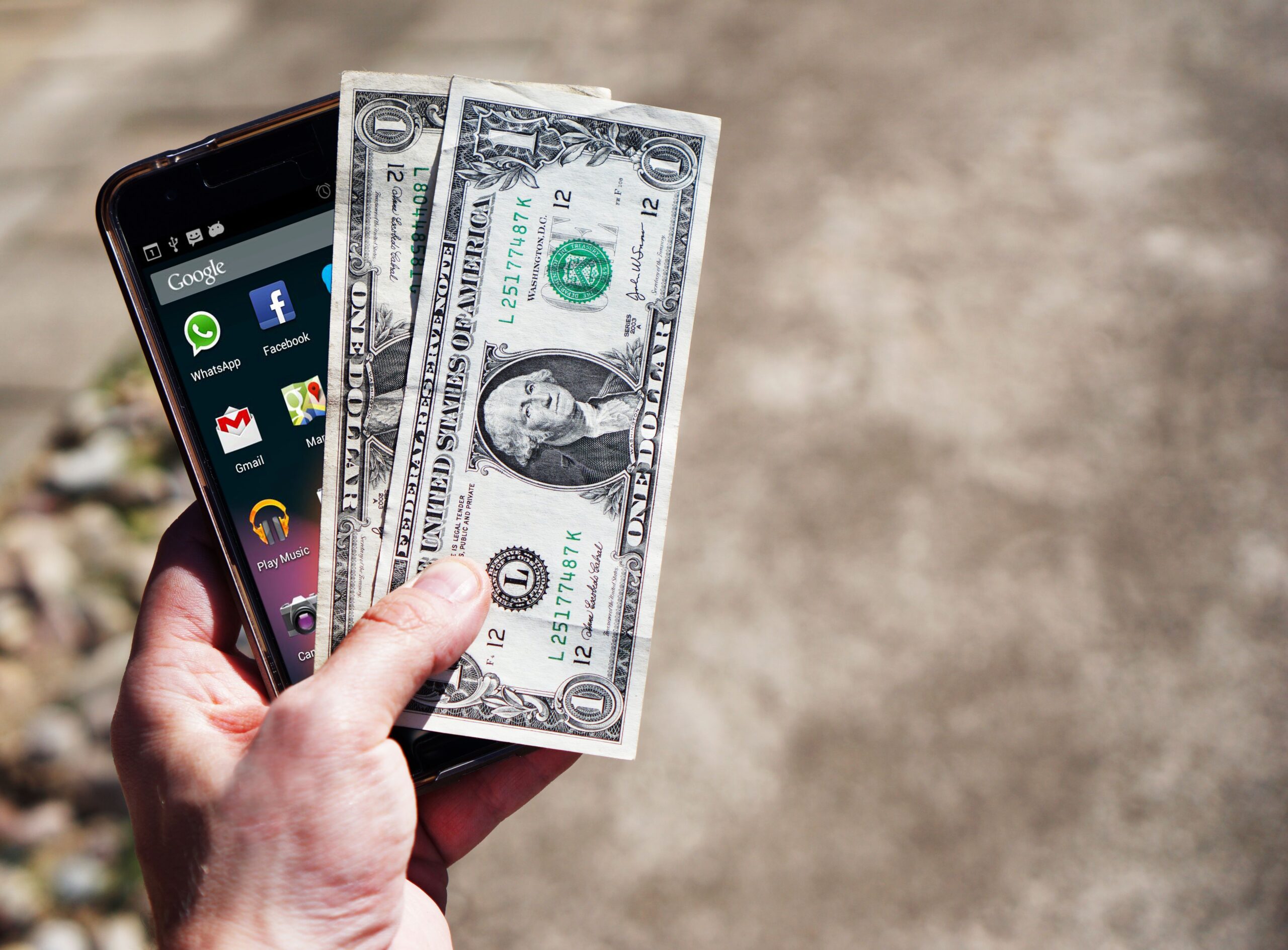
Mobile money is a digital payment system that allows users to store, send, and receive funds using a mobile phone, without requiring a traditional bank account. It functions as an electronic wallet linked to a user’s SIM card and phone number, enabling financial transactions through simple text messages or a dedicated app. Unlike mobile banking, which requires an existing bank account, mobile money is accessible to anyone with a basic mobile device, even feature phones without internet connectivity. This technology has become a cornerstone of financial inclusion, particularly in regions where banking infrastructure is limited, such as sub-Saharan Africa, South Asia, and parts of Latin America.
The core concept behind mobile money is the conversion of cash into digital value. A user deposits physical cash into their mobile money account through a network of local agents—typically small shopkeepers, kiosk operators, or dedicated booths. These agents accept the cash and credit the equivalent amount to the user’s mobile wallet, which is stored on a secure server managed by a mobile network operator (MNO) or a third-party financial technology company. The funds are recorded as a digital balance, accessible via the phone’s menu or an application. To withdraw cash, the process reverses: the user visits an agent, requests a withdrawal, and receives physical cash after the agent debits their digital balance.
Mobile money transactions rely on a secure, real-time messaging system. When a user sends money to another person, they initiate a transfer via their phone by entering the recipient’s phone number and the amount. The system verifies the sender’s PIN (personal identification number), checks for sufficient balance, and deducts the funds from the sender’s wallet. Simultaneously, the recipient’s wallet is credited, and both parties receive an SMS confirmation. This entire process takes seconds and operates on a two-way SMS protocol known as USSD (Unstructured Supplementary Service Data), which works on any mobile network, including 2G. For smartphones, dedicated apps or web-based platforms offer enhanced interfaces, but the underlying transaction logic remains the same.
The ecosystem supporting mobile money involves several key participants. The mobile network operator provides the technology platform and manages the digital ledger. Agents act as the physical bridge between cash and digital money, ensuring liquidity and accessibility. Regulators oversee compliance with anti-money laundering (AML) and know-your-customer (KYC) laws. Merchants accept mobile money as payment for goods and services, while third-party developers build applications for loans, savings, insurance, and bill payments on top of the core mobile money infrastructure. This interdependent model has fueled the rapid adoption of services like M-Pesa (Kenya), GCash (Philippines), bKash (Bangladesh), and MTN MoMo (across Africa).
For beginners, the most common mobile money features are person-to-person transfers, airtime top-ups, and bill payments. Sending money to family or friends is the foundational use case, often replacing informal cash delivery services. Users can also purchase prepaid mobile airtime directly from their wallet, avoiding the need for scratch cards. Paying utility bills—such as electricity, water, or internet—is a standard function, where the user selects a provider, enters an account number, and confirms payment via PIN. More advanced services include merchant payments at retail stores, salary disbursements by employers, and international remittances. Some platforms now offer microloans, where a user’s transaction history determines creditworthiness, enabling small, short-term loans disbursed directly to the wallet.
The security architecture of mobile money is layered and user-driven. Each account is tied to a unique phone number and requires registration with a government-issued ID. Transactions are protected by a secret PIN, known only to the user, which must be entered for every action. The PIN is encrypted during transmission over the air interface, preventing interception. If a phone is lost or stolen, the user can block the account by contacting the MNO’s customer service or dialing a short code from another device. Fraud risks do exist—such as phishing texts or social engineering attempts—but adherence to basic safety measures (never sharing PINs, verifying caller identities, using official apps) largely mitigates these threats. Additionally, regulatory caps on transaction limits and daily balances reduce the financial impact of unauthorized access.
Mobile money differs fundamentally from conventional banking. A bank account is tied to a physical branch network, requires credit checks, and often imposes maintenance fees. Mobile money requires no minimum balance, no monthly charges, and operates 24/7 from any location with cellular coverage. It also bypasses the need for internet access, as USSD codes work offline. However, mobile money typically lacks interest-bearing savings accounts (though some platforms now offer them), deposit insurance (though government-backed schemes are emerging), and the ability to earn credit history for large loans. For small-scale transactions—under $500 typically—mobile money is faster and cheaper than bank transfers, which may take days and incur high wire fees.
The economic impact of mobile money is profound. In countries like Kenya, mobile money has increased household savings by enabling safe digital storage instead of under-mattress cash. It has facilitated the growth of small businesses by allowing micro-entrepreneurs to accept digital payments without card terminals. During the COVID-19 pandemic, mobile money became a critical tool for distributing government relief funds, reducing physical contact and leakage. According to the GSM Association, mobile money accounts globally surpassed 1.6 billion in 2023, processing over $1 trillion in transactions annually. For the unbanked—approximately 1.4 billion adults worldwide—mobile money represents the first formal financial product they have ever used.
Setting up a mobile money account as a beginner is straightforward. You need a valid SIM card from a participating network operator and a government-issued identity document. Visit an official agent location with your phone and ID. The agent will assist in registering your details: name, date of birth, phone number, and ID number. You will then create a secret PIN—typically 4 to 6 digits—that must be memorized, not written down. The agent activates your account immediately, and you can deposit cash to fund your wallet. Registration is usually free, and the process takes less than ten minutes. Some operators offer remote registration via a national ID database, but agent-assisted enrollment remains the most common method.
Transaction costs are transparent and vary by provider. Sending money incurs a small fee, proportional to the amount transferred, often ranging from $0.10 to $1.00. Withdrawals from an agent also carry a fee, again tiered by amount. Deposits into your wallet are typically free. Airtime purchases and bill payments may include a service charge or be zero-rated. Comparing fee schedules across providers is advisable, as costs differ significantly. Most operators publish their fee structures on their website or via USSD menus. For international remittances, mobile money is often cheaper than traditional money transfer operators (MTOs) like Western Union, with fees as low as 1-2% of the transfer value and near-instant settlement.
To maximize the benefits of mobile money, beginners should adopt a few best practices. Register your SIM card with your correct ID to avoid suspension under KYC regulations. Keep your PIN private—never share it over phone calls or texts. Only transact with official agents identified by branded signage or uniforms. Regularly check your transaction history via USSD to detect any unauthorized activity. If you lose your phone, contact your MNO immediately to block the mobile money service. For smartphones, enable two-factor authentication if available. Consider using a separate wallet for savings versus daily spending to limit exposure. Finally, stay informed about new features, as mobile money platforms continuously add services like international travel insurance, crowdfunding, and government tax payments.
The technology underlying mobile money is built on a secure server architecture known as a mobile wallet platform. This platform maintains a central database of all account balances and transaction logs. Every transaction is recorded as a double-entry bookkeeping entry, ensuring that the sum of all wallet balances matches the total cash held by agents and the MNO’s liquidity pool. The MNO acts as the clearinghouse, settling transactions between users without involving traditional banking networks. Some mobile money systems now integrate with bank accounts via APIs, allowing seamless transfers between mobile wallets and linked bank accounts, but the core operation remains independent of the banking system.
Regulatory frameworks for mobile money have evolved significantly. Most countries now require mobile money providers to be licensed as payment institutions or electronic money issuers. Providers must hold customer funds in trust accounts at regulated banks, ensuring that 100% of digital balances are backed by fiat currency. This prevents the MNO from lending out customer deposits, protecting users from default. Regulators also mandate transaction limits—often $500–$1,000 per day and $3,000–$5,000 per month—to combat money laundering. KYC rules require tiered accounts: basic accounts with low transaction limits require only a phone number, while higher limits demand full ID verification. These controls balance accessibility with financial integrity.
The future trajectory of mobile money includes deeper integration with e-commerce, decentralized finance (DeFi), and central bank digital currencies (CBDCs). In 2024, several mobile money operators launched cross-border payment corridors using blockchain or stablecoins, reducing remittance costs to near zero. Biometric verification—using fingerprints or facial recognition—is replacing PINs in some markets, enhancing security for illiterate users. Machine learning algorithms now analyze transaction patterns to offer personalized savings goals and credit products. As 5G expands, mobile money apps will support instant video call customer service and real-time dispute resolution. For beginners, this means the entry barrier will continue to lower, with more intuitive interfaces and financial education embedded directly into apps.
When comparing mobile money to other digital payment methods, such as credit cards or digital wallets like PayPal, distinct advantages emerge. Mobile money does not require a bank account, a stable internet connection, or a credit history. Transaction fees are typically lower than card processing fees (which average 2-3% plus fixed costs). Setup is instantaneous, with no underwriting delays. However, mobile money lacks chargeback protections common to credit cards and does not earn rewards points. For purchasing high-value items, credit cards may offer better fraud liability coverage. Mobile money is best suited for person-to-person transfers, small-value merchant payments, and utility bills—especially in environments where cash is still dominant.
Challenges remain despite rapid growth. Agent liquidity risk means some agents run out of cash, preventing withdrawals. Network downtime during peak hours can delay transactions. Scams involving fake agent booths or phishing links persist. Users in rural areas may travel long distances to find an agent. Data privacy concerns arise when MNOs share transaction data with third-party loan providers. Energy poverty—lack of electricity for phone charging—limits usage in off-grid regions. Nonetheless, mobile money has proven remarkably resilient, with recovery rates above 99% for network outages and a fraud loss rate below 0.1% of transaction volume, according to industry reports.
Educational resources for beginners are expanding. Mobile network operators offer free USSD-based tutorials that teach basic operations. YouTube channels and community workshops demonstrate step-by-step procedures. Many platforms have a “refer a friend” bonus program that incentivizes peer-to-peer learning. Government agencies in countries like Tanzania and India have integrated mobile money training into financial literacy campaigns. For absolute beginners, the most effective learning method is to perform a small test transaction—send $1 to a family member—to gain confidence. The key is to remember that mobile money is simply another tool for managing value, no different from a digital version of the cash in your pocket, secured by a PIN and accessible from any mobile phone with network coverage.